Most people have a general sense that deep cleaning is more thorough than regular cleaning, but the line between the two can be hard to define. Understanding the difference matters when you're trying to figure out what your home or office actually needs — and whether investing in a professional deep clean makes sense for your situation.
This guide covers what deep cleaning actually involves, the circumstances where it provides the most value, and what to reasonably expect from the process.
What Sets Deep Cleaning Apart
Standard cleaning addresses the surfaces and areas that need regular maintenance: floors, countertops, visible bathroom surfaces, and general tidying. It's designed to maintain a level of cleanliness over time. Deep cleaning is different in both scope and intent — it's designed to address the accumulated grime, buildup, and neglected areas that standard routines don't reach.
The distinction shows up clearly in kitchens. A standard kitchen clean means wiping counters, cleaning the stovetop surface, and addressing the sink. A deep clean means the inside of the oven, the burner grates soaked and scrubbed, the inside of the refrigerator, degreasing the hood vent filter, cleaning the inside and outside of the microwave properly, and wiping down the fronts of all cabinets where grease gradually deposits over months of cooking.
In bathrooms, the difference is grout. A standard clean gets the visible toilet, sink, and shower surfaces. A deep clean involves scrubbing grout lines, addressing the mineral deposits around faucet bases, cleaning caulking, and addressing the kind of soap scum that builds up gradually in corners and on shower door tracks.

The Situations Where It's Most Useful
Deep cleaning is most valuable in specific circumstances rather than as a permanent substitute for regular maintenance. Understanding when it makes the most sense helps you get the most out of the service.
Starting a New Cleaning Routine
If you're beginning a regular cleaning schedule — whether you're doing it yourself or hiring a service — starting with a deep clean creates a baseline that's much easier to maintain going forward. A home that has accumulated months or years of standard buildup will never catch up through regular cleaning alone. The deep clean resets it, and regular maintenance keeps it there.
This is one of the most common reasons clients at Han Cleaning request a deep clean as their first service. Many then transition to bi-weekly standard cleans once the baseline is established, and find that the recurring cost is lower because less time is required per visit.
After Renovation or Construction Work
Construction and renovation projects leave a specific kind of mess that normal cleaning doesn't fully address. Fine dust from drywall and sanding penetrates into vents, settles on top of cabinets, works into window tracks, and coats surfaces that weren't directly in the work area. Adhesive residue, paint splatters, and debris get into corners and crevices. A proper post-construction clean requires both the time and the right approach to address all of it systematically.
Moving Into or Out of a Property
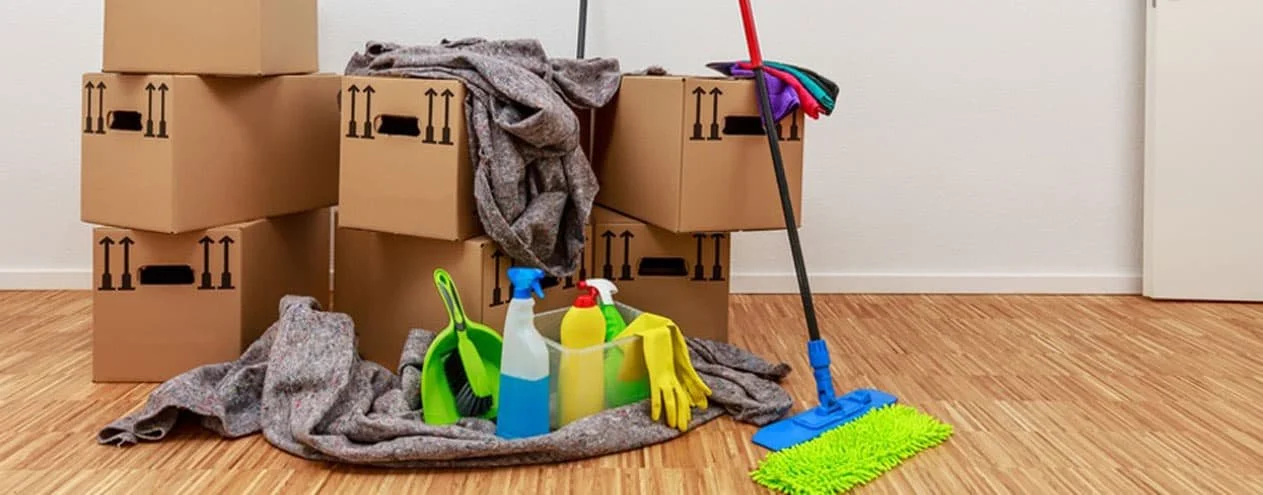
Move-out cleaning is one of the most straightforward cases for a deep clean. Whether you're a tenant trying to get your deposit back or a homeowner handing over keys, the expectation is a property that's clean throughout — including inside appliances, closets, and areas that may not have been touched during tenancy.
Move-in cleaning serves a different but equally clear purpose: you don't know how thoroughly the previous occupants cleaned, and you're starting fresh in a space that will become your home. A thorough clean before you move in means you start from a known baseline rather than inheriting someone else's standard.
Seasonal or Annual Resets
Many households do one or two deep cleans per year as a matter of maintenance — typically in spring and before winter. This catches the areas that gradually accumulate over months: behind and under appliances, inside the oven, inside closets, window tracks, light fixtures, and ceiling fans. It's not that these areas become dramatically dirty between visits, but that they never get addressed in a standard routine and do accumulate meaningfully over the course of months.
What the Process Actually Involves
A professional deep clean typically takes significantly longer than a standard visit. For an average three-bedroom home that has been maintained with regular cleaning, a deep clean might take four to six hours. For a home that hasn't had professional attention in a year or more, or for larger properties, it takes longer.
The process is methodical. A professional team works room by room, and within each room works top to bottom so that dust dislodged from higher surfaces doesn't settle on areas already cleaned. Light fixtures and ceiling fans come first, then shelving and furniture, then mid-level surfaces, then floors.
Some areas that get specific attention during a deep clean:
- Inside the oven, including door glass and racks
- Inside the refrigerator (typically requires the client to empty it first)
- Grout scrubbing in bathrooms and kitchen
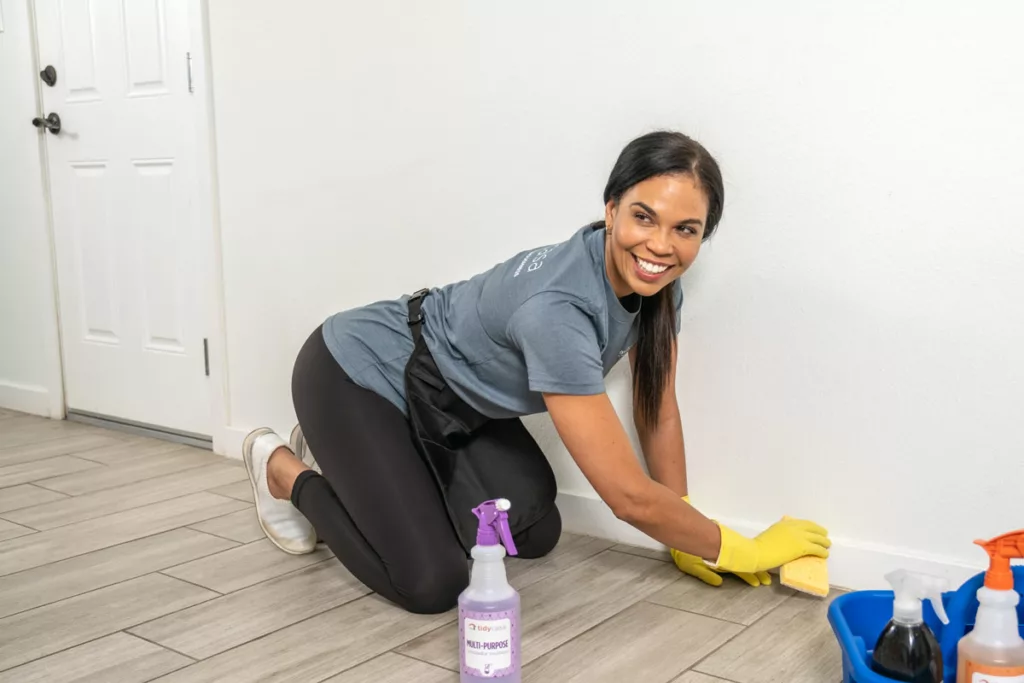
- Baseboards throughout the home — these collect dust continuously but are easy to overlook
- Window sills and tracks, where dust and debris accumulate but aren't usually wiped in regular cleaning
- Light switch plates and outlet covers
- Door frames and the tops of doors
- Behind the toilet and around the base
- Under and behind furniture and appliances when accessible
Setting Realistic Expectations
Deep cleaning addresses accumulated dirt and buildup effectively, but there are limits to what any cleaning service can achieve. Stains that have been present for years and have fully set into grout or porous surfaces may not fully come out. Oven buildup that has been baked on through hundreds of cooking cycles requires a different approach than standard grime. Mold that has developed behind tiles or inside walls is a remediation issue, not a cleaning issue.
A professional service will be honest with you about these limitations before starting work. If something can't be addressed through cleaning, the right response is to say so rather than spending hours on something that won't yield results.
How Often Should You Deep Clean?
For most households that maintain regular cleaning between deep cleans, once or twice a year is a reasonable interval. Homes with pets, children, or heavy cooking use might benefit from three times a year. Rental properties benefit from a deep clean between each tenancy regardless of how long the tenancy was.
The honest answer is that the right frequency depends on how a space is used and how consistently it's maintained between deep cleans. A home with weekly professional cleaning and two adults needs a deep clean less often than a home with four kids, two dogs, and no regular cleaning routine.
If you're unsure whether your space is ready for a deep clean or could be managed with a standard clean, the simplest approach is to describe your situation to the cleaning service and ask for their honest recommendation. A service worth hiring will give you a practical answer rather than automatically recommending the more expensive option.
Han Cleaning provides professional deep cleaning and regular maintenance cleaning services in Bridgeport, WV and surrounding areas.